Evidence-Based Parenting Assessments Explained
Parenting assessments are designed to understand a parent’s ability to meet their child’s needs in a safe, fair and evidence-based way. The purpose is not to unfairly judge parents, but to look clearly at parenting capacity, child safety, daily care, emotional support and the real support a family may need.
Evidence is usually gathered from real-life parenting situations, not just from one meeting or conversation. This may include how a parent responds to their child, manages routines, accepts guidance, keeps the child safe and builds a stable relationship over time.
Parenting assessments can take place in different settings, including a residential family assessment centre, a residential family assessment unit, or through community assessment services. In each setting, the aim is to collect clear evidence that supports better child protection decisions and helps professionals understand what outcomes are realistic for the child and family.
A good parenting capacity assessment should always keep the child’s welfare at the centre. Whether the assessment takes place in a family assessment unit or a children’s assessment centre, the focus should be on fairness, safeguarding, practical support and evidence that reflects real parenting behaviour.
What is a parenting assessment?
A parenting assessment is a structured process used to understand how well a parent can meet their child’s needs. It looks at daily care, safety, emotional warmth, routines, boundaries and the parent’s ability to respond to guidance. The aim is not to look for faults only, but to build a clear picture of both strengths and concerns.
Parenting assessments may be requested by social services, local authorities, or used as part of a parenting assessment for court. They help professionals understand whether a child’s needs are being met and what type of support may be needed to improve family outcomes.
Purpose of a parenting assessment:
The main purpose of a parenting capacity assessment is to understand what is happening in real family life. It gives professionals evidence about how a parent cares for their child, how they respond under pressure and whether they can make safe, consistent decisions.
A good assessment should look at the full picture, including:
The parent’s strengths and positive parenting behaviours
Any areas of concern around safety, care or supervision
The child’s daily needs, including food, hygiene, sleep and routine
The child’s emotional needs, development and sense of security
The parent’s ability to understand advice and make changes
The practical support the family may need going forward
This balanced approach is important because every family situation is different. Some parents may need short-term guidance, while others may need more structured support before professionals can decide what is safest for the child.
Where parenting assessments can take place:
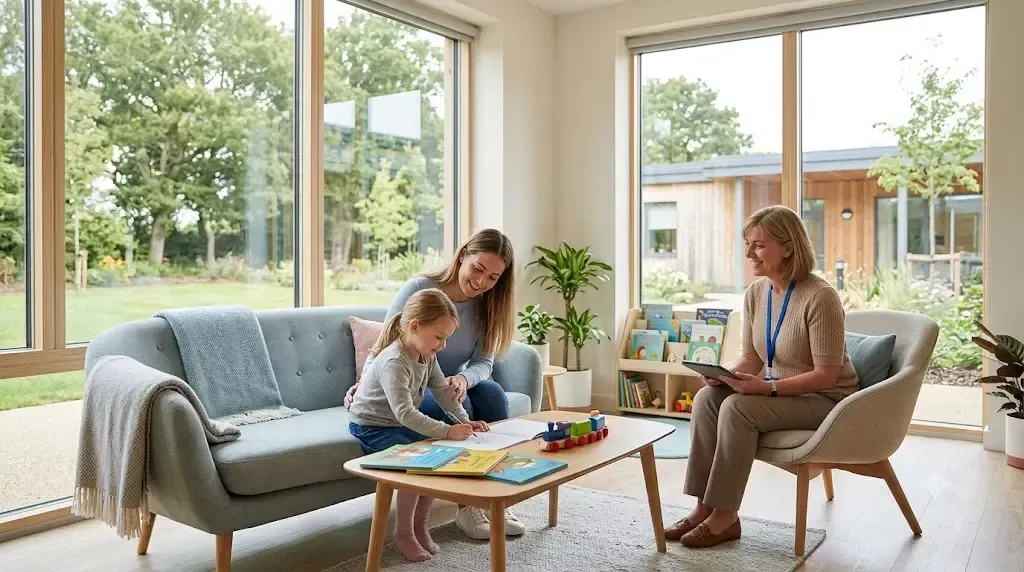
Parenting assessments can happen in different settings depending on the family’s situation, level of concern and the type of evidence needed. Some families may be assessed while living in a residential family assessment centre, where daily parenting can be observed in a safe and structured environment.
Other assessments may take place through a residential family assessment unit, a residential parenting assessment centre, a family assessment unit, or community assessment services. In some cases, a child and parent assessment centre may be used where closer observation and support are needed.
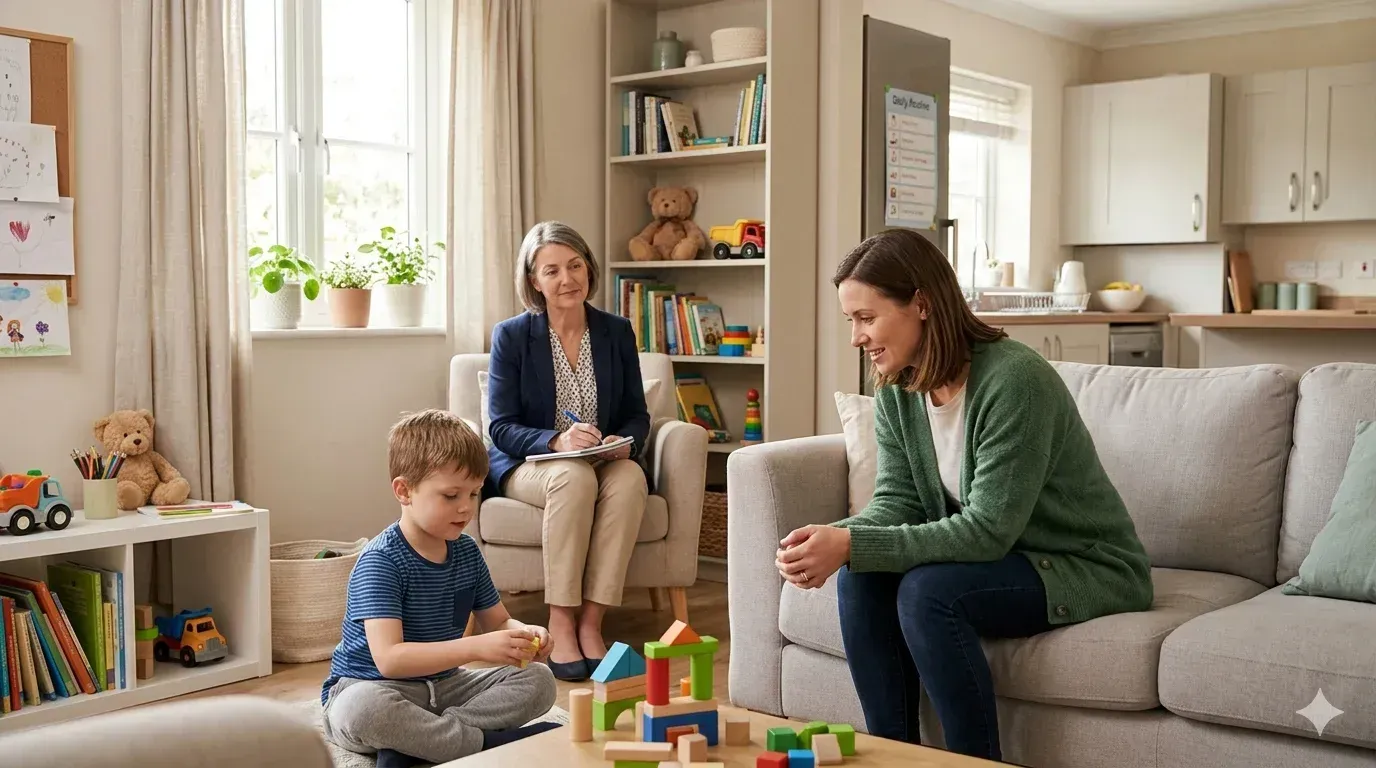
In a residential setting, professionals can observe everyday routines such as feeding, bedtime, supervision, emotional responses and how the parent manages difficult moments. In community-based assessments, professionals can see how parenting works in the family’s own home and local environment.
How Evidence Is Collected in Real Settings?
Evidence-based parenting assessments are not built on one conversation, one visit or one opinion. They look at how parenting happens in real situations. This helps professionals understand what daily care looks like, how a parent responds to their child and whether safe routines can be maintained over time.
The evidence collected during parenting assessments may come from observation, discussion, records, feedback and direct work with the family. The aim is to build a fair and balanced picture of the parent’s strengths, risks, support needs and ability to make positive changes.
Observation of everyday parenting routines:
A key part of assessment is observing how a parent manages normal daily tasks. These small moments often show more than a formal interview because they reflect how care is given in real life.
Professionals may look at areas such as:
- Feeding routines and whether the child’s basic needs are met
- Hygiene, clothing and personal care
- Bedtime routines and sleep structure
- Emotional warmth, comfort and reassurance
- Safety awareness in the home or assessment setting
- Supervision during play, meals and daily activities
- How the parent responds when the child is upset, tired or unsettled
- The condition and suitability of the home environment
- Parent-child bonding, communication and interaction
This type of evidence helps professionals understand whether the child receives consistent care, emotional security and safe supervision. It also shows whether the parent can recognise the child’s needs and respond in a calm, appropriate and reliable way.
Residential settings and daily evidence:
In a residential family assessment centre, evidence can be collected across daily life rather than during short appointments only. Staff can observe routines, behaviour, responses and progress over a longer period. This gives a fuller view of parenting capacity because it is based on repeated patterns, not just one good or difficult day.
A residential parenting assessment centre or residential parenting assessment unit may help professionals see how a parent manages real parenting responsibilities with guidance and structure around them. This can include how they follow advice, manage stress, keep the child safe and build a stable routine.
Daily evidence may show:
- Whether the parent can apply guidance in practice
- How consistently the child’s needs are met
- Whether safety concerns reduce or continue
- How the parent responds to feedback
- Whether routines improve over time
- How the child appears to respond to the parent’s care
This matters because parenting assessments should not rely on assumptions. A longer observation period can help show whether change is realistic, whether support is working and whether the child’s welfare is being protected.
Community-based evidence:
Evidence can also be collected through community assessment services. These assessments take place in the family’s own home or local environment, which can help professionals understand how parenting works outside a residential setting.
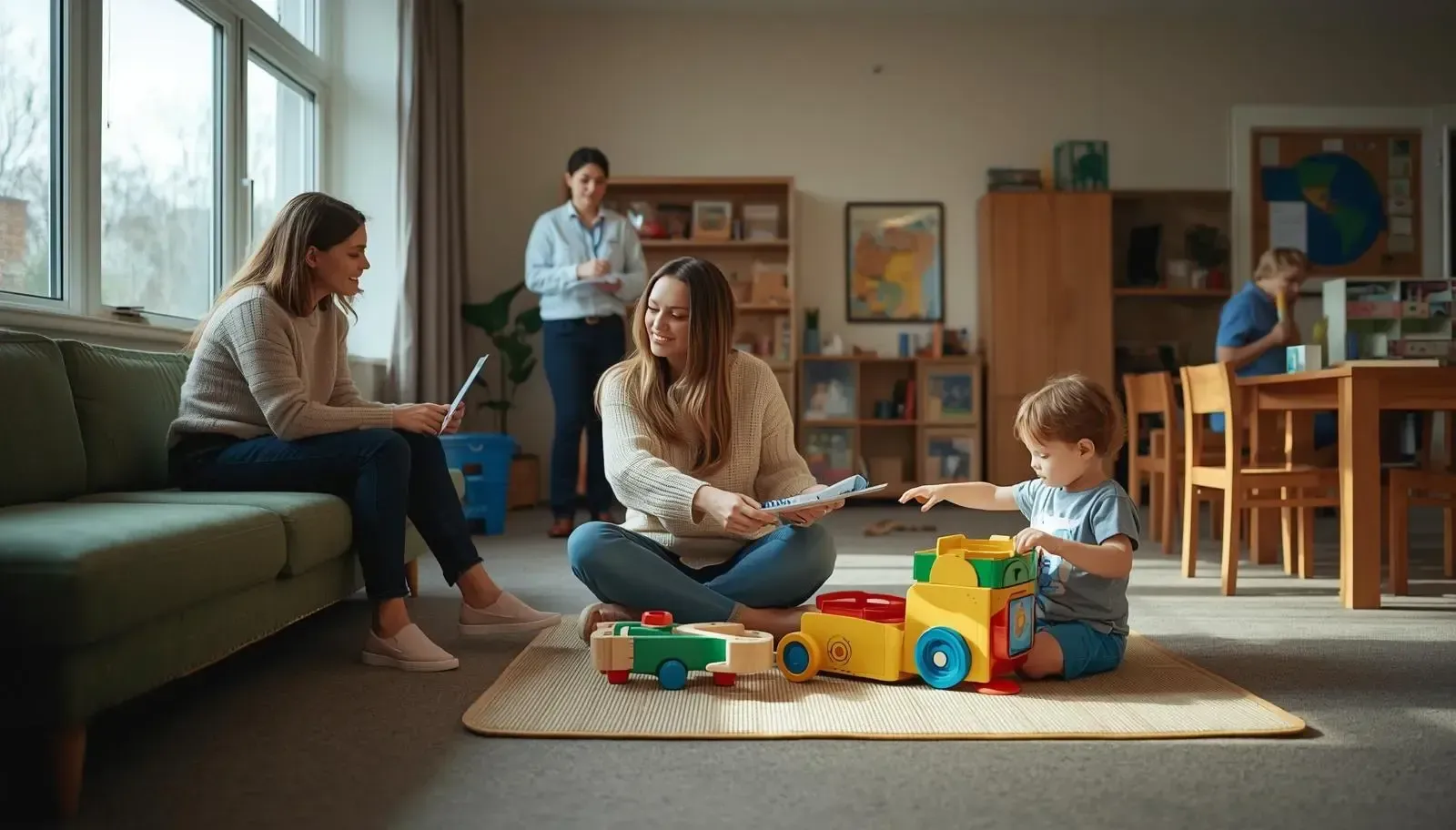
Community-based assessment may include planned visits, unannounced visits, parenting observation, direct feedback, professional liaison and review meetings. This can be useful when professionals need to understand how the parent manages daily care, home routines, safety and support networks in their usual surroundings.
A community setting can show important details, such as:
- How the parent manages the child’s routine at home
- Whether the living environment is safe and suitable
- How the parent uses family, school, health or community support
- Whether advice is followed between visits
- How the child responds in their normal environment
- Whether concerns are consistent or linked to specific situations
Both residential and community-based assessments can provide valuable evidence. The right setting depends on the child’s needs, the level of concern and the questions the assessment needs to answer. Whether support is provided through a child and parent assessment centre, a residential setting or community assessment services, the focus should remain the same: clear evidence, fair analysis and safer outcomes for the child.
Role of Professional Analysis in Assessment:
Collecting evidence is only one part of a parenting assessment. The next step is professional analysis. This is where observations, records, feedback and daily parenting examples are reviewed together to understand what they mean for the child’s safety, wellbeing and long-term needs.
Without proper analysis, evidence can be misunderstood or taken out of context. A fair assessment should look at patterns over time, not just isolated moments. It should also consider both the parent’s strengths and any areas where further support or safeguarding planning may be needed.
Turning observation into balanced assessment:
Professionals do not simply record what happens during an assessment. They look for patterns in how a parent responds to their child, manages routines, accepts advice and keeps the child safe.
This may include looking at:
- Whether concerns happen once or appear repeatedly
- Whether the parent can learn from feedback
- Whether positive changes are maintained over time
- How the child responds to the parent’s care
- Whether the parent understands the child’s emotional and practical needs
- What strengths can be built on through support
- What risks may still need further planning
This balanced approach is important in any parenting capacity assessment. It helps professionals separate a one-off mistake from a repeated concern. It also makes sure that the parent’s positive efforts are recognised, not only the difficulties.
Why professional judgement must be evidence-based:
Professional judgement should be clear, practical and linked to evidence. In parenting assessments, it is not enough for a report to say that something is a concern. The report should explain why it is a concern, what evidence supports it and how it affects the child’s welfare.
For example, recommendations should be connected to:
- Direct observations of parenting
- Records from the assessment period
- The child’s needs and responses
- The parent’s ability to understand and apply advice
- Any changes or concerns seen over time
- Relevant information from social workers or other professionals
This is especially important in a parenting assessment for court or parent assessment social services work. Courts and local authorities need reports that are transparent, balanced and useful for decision-making. A strong report should help professionals understand what has been observed, what progress has been made and what support or planning may be needed next.
Specialist frameworks and training:
Some parenting assessments may involve specialist assessment frameworks or additional training, depending on the parent’s needs and the questions the assessment must answer. For example, parent assess training may be relevant in some services where parents have learning disabilities or additional needs.
However, specialist frameworks should be mentioned carefully and only where they are genuinely part of the service being provided. The most important point is that any assessment approach should be fair, accessible and based on clear evidence.
Where additional needs are present, professionals may need to consider communication style, learning pace, practical demonstrations, repetition and the type of support that helps the parent understand and apply guidance. This can make the parenting capacity assessment more meaningful and fair.
Professional analysis gives evidence its real value. It helps turn daily observations into clear findings, practical recommendations and child-focused decisions that support safer outcomes.
How Evidence Supports Child Protection Decisions?
Evidence plays an important role in child protection because it helps professionals move beyond assumptions. In parenting assessments, the focus is not only on what a parent says, but on what can be seen, recorded and understood through real parenting situations.
Clear evidence helps professionals understand whether a child is safe, whether their needs are being met and whether any concerns can be managed with the right support. This makes the assessment more balanced, transparent and focused on the child’s welfare.
Evidence helps professionals understand risk and safety:
Child protection decisions need to be based on a clear understanding of the child’s daily experience. This includes looking at immediate safety, emotional care, routines, supervision and how the parent responds to the child’s needs.
During parenting assessments, professionals may consider:
- Whether the child’s basic needs are being met consistently
- Whether the parent can provide safe supervision
- How the parent responds when the child is upset, tired or distressed
- Whether routines and boundaries are suitable for the child’s age and needs
- Whether the home or care setting feels safe and stable
- Whether the child receives emotional warmth, comfort and attention
- Whether identified risks can reduce with guidance, planning and support
This evidence helps professionals understand the difference between concerns that can be improved with support and concerns that may continue to place the child at risk. It also helps identify what practical help a parent may need to make safer and more consistent decisions.
Evidence helps courts and local authorities make informed decisions:
A parenting assessment for court or local authority planning should provide clear, child-focused evidence. The report may help social workers, courts and other professionals understand parenting capacity, areas of concern, strengths and the type of support that may be needed.
In parent assessment social services work, evidence can support decisions around:
- Ongoing family support
- Child protection planning
- Contact arrangements
- Residential or community-based assessment
- Placement options
- Further specialist assessment
- Next steps for the child and family
The purpose is not to make decisions based on one incident or one opinion. A fair assessment should connect recommendations to what has been observed, recorded and analysed over time.
This is especially important in a children’s assessment centre or family assessment setting, where the child’s welfare must remain central. Professionals need to understand not only whether a parent wants to make changes, but whether they can apply those changes in daily life and maintain them in a way that keeps the child safe.
Evidence-based parenting assessments can therefore support better child protection decisions by showing what is working, what remains a concern and what support may be needed to achieve safer outcomes for the child.
Linking Evidence to Real-World Parenting Outcomes:
The value of a parenting capacity assessment is not only in the final report. Its real purpose is to understand what the child experiences day to day and what needs to change to support safer, more stable outcomes.
Evidence helps professionals see whether a parent can meet their child’s needs in practice. It also helps identify what support may be needed, what progress is possible and whether the child’s safety and wellbeing can be maintained over time.
Evidence shows what support a parent may need:
A good assessment should not simply list concerns. It should also show what support may help the parent improve. This is important because some parents may need practical guidance, clearer routines or help understanding their child’s emotional and developmental needs.
Evidence may highlight support needs such as:
- Practical parenting guidance during daily routines
- Help with feeding, hygiene, sleep and supervision
- Routine-building for the child’s stability
- Support to create a safer home environment
- Guidance around emotional responses and comfort
- Better understanding of the child’s age, stage and needs
- Planning around family, professional or community support networks
In a residential family assessment centre or family assessment unit, this support can often be observed in real time. Professionals can see whether advice is understood, whether it is applied and whether it leads to safer care for the child.
Evidence can show progress over time:
Real progress is usually shown through repeated behaviour, not one positive moment. This is why evidence over time is important in a children’s assessment centre or residential assessment setting.
Professionals may look at whether:
- The parent accepts advice and feedback
- Learning is applied in daily care
- Routines become more consistent
- The child’s needs are met more reliably
- Safety concerns reduce with support
- Emotional responses become calmer and more child-focused
- Positive changes continue without constant prompting
This helps professionals understand whether improvement is realistic and sustainable. It also shows whether the child is experiencing safer, more predictable and more nurturing care.
Why outcomes matter more than paperwork:
An assessment report is important, but it should never be the only focus. The best parenting assessments keep the child’s lived experience at the centre. This means looking at what daily life feels like for the child, how safe they are, how settled they appear and whether their needs are being met consistently.
Real-world outcomes may include:
- Better daily routines
- Safer supervision
- Improved parent-child interaction
- Clearer emotional responses
- Stronger support planning
- More informed long-term care decisions
- Greater stability for the child
The aim is to connect evidence with practical next steps. Whether the outcome involves further support, a clear transition plan, contact arrangements or longer-term planning, the decision should be based on what the evidence shows about the child’s safety, stability and wellbeing.
Evidence-based assessments are strongest when they do more than describe concerns. They help professionals understand what is possible, what support is needed and what outcome is most likely to protect the child’s future.
Challenges in Evidence-Based Assessments:
Evidence-based assessments can provide a clearer understanding of parenting capacity, but they can also feel difficult for families. Parents may be under pressure, children may be unsettled, and professionals need to make sure the evidence is collected and understood fairly.
A balanced assessment should recognise both strengths and concerns. It should also consider the wider context around the family, including stress, support needs, past experiences and the setting where the assessment takes place.
Parents may feel anxious or judged:
For many parents, being part of an assessment can feel stressful. They may worry about being watched, misunderstood or judged only by their mistakes. This anxiety is understandable, especially when the assessment is connected to parent assessment social services work or important decisions about a child’s future.
Clear communication can help reduce this pressure. Parents should understand what is being assessed, why evidence is being collected and how the process works. When expectations are explained properly, the assessment can feel more transparent and less confusing.
A fair process also gives parents the chance to show their strengths, ask questions, respond to feedback and demonstrate whether they can make changes in daily parenting.
Evidence must be interpreted fairly:
Evidence is only useful when it is understood in the right context. One difficult moment or one bad day should not automatically define the whole assessment. Professionals need to look for repeated patterns, consistency and how the parent responds to guidance over time.
A fair assessment may consider:
- Whether the concern happened once or appeared repeatedly
- How the parent responded after advice or feedback
- Whether stress, trauma or anxiety affected the situation
- Whether the parent has learning needs or communication needs
- What support network is available to the family
- Whether the child’s needs are being met more consistently over time
This careful approach is important in any residential family assessment unit or residential parenting assessment unit. The aim should be to understand the full picture, not to make decisions from isolated moments.
Different settings show different evidence:
The setting of an assessment can affect the type of evidence collected. A residential assessment takes place in a structured environment, where professionals can observe daily routines closely and provide regular feedback. This can be helpful when there are concerns that need more detailed observation.
Community assessment services may show a different picture because the assessment takes place in the family’s own home or local environment. This can help professionals understand how parenting works with real household routines, local support, school arrangements and day-to-day pressures.
Both settings can be valuable, but they do not always show the same things. A residential setting may show how a parent manages with structure and support, while a community setting may show how parenting works in the family’s usual environment.
The most useful assessments are those that explain the evidence clearly, consider the setting fairly and connect observations to the child’s safety, wellbeing and long-term needs.
Why Evidence-Based Assessments Improve Outcomes?
Evidence-based parenting assessments can improve outcomes because they make the process clearer, fairer and more focused on the child’s needs. Instead of relying only on opinion, they use real examples, observations and professional analysis to understand what is happening in daily parenting.
This approach helps parents, professionals and decision-makers see what is working well, what needs to change and what support may help the family move forward safely.
They make the process more transparent:
When an assessment is evidence-based, parents can better understand what is being looked at and why it matters. This can make the process feel less confusing, especially when the assessment involves sensitive concerns about parenting capacity, safety or the child’s wellbeing.
Clear evidence also helps professionals explain concerns in a more practical way. Instead of using general statements, they can link feedback to real situations, such as routines, supervision, emotional responses or how advice has been followed.
This can make recommendations easier to understand because they are connected to what has actually been observed. In a residential family assessment centre or child and parent assessment centre, this transparency can help families see where progress is being made and where further support may still be needed.
They support better decisions for children:
The strongest parenting assessments keep the child’s needs at the centre. Evidence helps professionals understand what daily life is like for the child, whether they are safe and whether their emotional, physical and developmental needs are being met.
This can support better decisions by helping professionals consider:
- What the child needs now
- Whether the parent can meet those needs consistently
- What support could reduce concerns
- Whether progress is realistic and sustainable
- What planning is needed for the child’s safety and stability
When decisions are linked to clear evidence, support plans can become more practical. Long-term planning can also become stronger because it is based on real parenting behaviour, not assumptions.
They help identify strengths as well as concerns:
A parenting capacity assessment should not only focus on risks. It should also recognise what the parent does well. Strengths are an important part of the evidence because they show what can be built on during support and planning.
A balanced assessment may identify strengths such as:
- Positive emotional connection with the child
- Willingness to accept advice
- Ability to build routines
- Safe responses during daily care
- Improved understanding of the child’s needs
- Use of family or professional support
Recognising strengths can help build trust and make the assessment feel more balanced. It also helps professionals understand whether the parent has the ability to make changes that support safer outcomes.
Evidence-based assessments are useful because they create a clearer link between parenting behaviour, support needs and child welfare. When the evidence is fair and well understood, it can lead to better decisions, stronger support plans and more stable outcomes for children and families.
Frequently Asked Questions (FAQs)
What is an evidence-based parenting assessment?
An evidence-based parenting assessment is a structured assessment where decisions are supported by real evidence. This may include parenting observations, written records, professional analysis, feedback from other services and real examples of how a parent responds to their child’s needs.
Is a parenting assessment only used in court?
No. A parenting assessment may be used for court proceedings, but it can also support local authority planning, child protection decisions and family support planning. The aim is to understand parenting capacity, child safety and what support may be needed.
What evidence is used in parenting assessments?
Evidence may include daily routines, parent-child interaction, safety awareness, emotional care, response to advice, home conditions, professional records and progress over time. This helps professionals understand how parenting works in real-life situations.
What is the difference between residential and community parenting assessments?
A residential parenting assessment takes place in a structured family assessment setting, where daily parenting can be observed closely. A community parenting assessment usually takes place in the family’s home or local environment, where routines, support networks and day-to-day parenting can be understood in a real setting.
Do parenting assessments only focus on risks?
No. Good parenting assessments look at both strengths and concerns. They consider the parent’s support needs, ability to make changes, relationship with the child and the child’s lived experience. This helps create a more balanced and fair assessment.
What is a children’s assessment centre?
A children’s assessment centre supports the assessment of a child’s needs, parenting capacity, safeguarding concerns and family support planning.
Conclusion:
Evidence-based parenting assessments create a fairer and more structured way to understand parenting capacity. They help professionals look at real-life evidence, not assumptions, so decisions can be based on what is observed, recorded and understood over time.
The main focus should always be child safety, family outcomes and the support needed to help parents meet their child’s needs. Depending on the family’s situation, assessment may take place in a residential setting or through community-based support.
At Nucleus Horizons, our assessment approach is designed to be fair, transparent and child-focused, helping parents, professionals and local authorities understand parenting capacity through clear evidence and supportive guidance. Learn more about our residential family assessment centre in Southampton.
Share On